
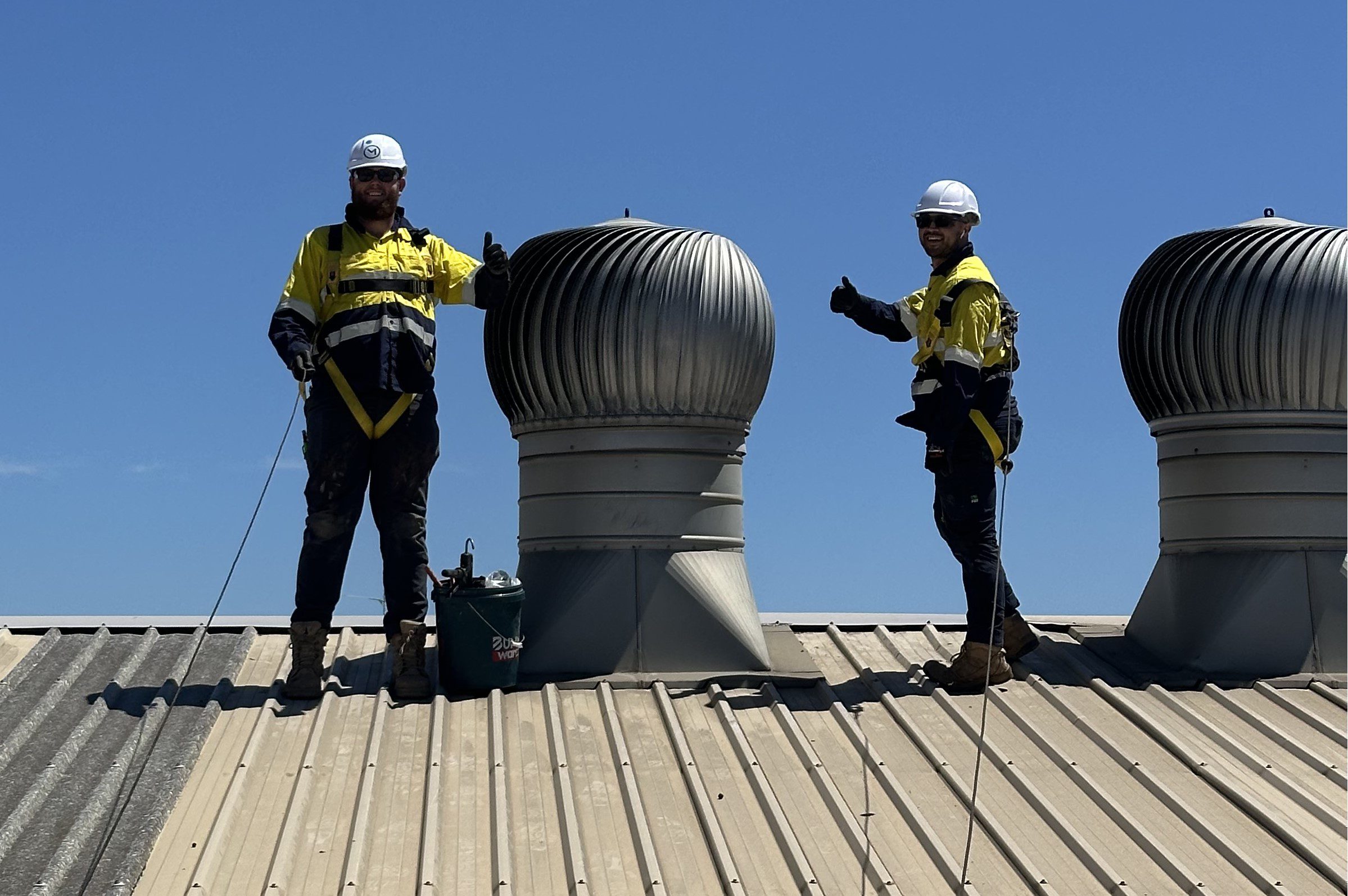
Roof Leak Inspections – A Process of Elimination
“Do your best, silicone the rest”. A common catchphrase in our industry.
If only that was the case with all roof leaks. One of the most important things we try to educate our clients about roof leaks is that they are rarely straightforward.
Water does not always enter the roof directly above where it appears inside your home. It can travel along rafters, battens, insulation, flashing or roof sheets before finally showing up as a ceiling stain, damp wall, or drip. This means the visible internal damage is often not the actual source of the leak. Inspections can take time, and multiple visits, which we understand is frustrating, and expensive, for our clients. Let’s explain why sometimes repeat visits occur during a leak investigation.
Why the Source of a Roof Leak Isn’t Always Obvious
In some cases, the cause of a leak is immediately visible such as a cracked tile, damaged flashing or blocked gutter. However, in many situations:
- The leak only occurs during heavy rain, wind-driven rain or specific storm conditions.
- The roof dries out before an inspection can be safely carried out (we don’t send plumbers up onto a roof in rain as its too hazardous.
- Multiple potential entry points exist in the same area.
- Previous repairs or modifications have altered water flow paths.
Because of this, diagnosing a roof leak is often more like investigative work than a simple repair.
What Looks Like a ‘Misdiagnosis’ or Bad Plumbing Is Often Investigation
If the source of a leak is not immediately obvious, our plumbers follow a methodical process of elimination using our SafetyCulture app. This ensures no step of the thorough process is missed may involve:
- Identifying the most likely entry point based on roof design, pitch and water flow
- Rectifying or resealing one potential cause
- Monitoring the roof through the next rainfall event
- Returning if the issue persists to rule out the next possible cause
While this can sometimes require more than one visit, it is not guesswork. It is a logical, plumbing standards-based approach to ruling out causes until the true source is identified and permanently resolved.
Roof leaks can be deceptive and what seems like the problem may simply be the first weak point water finds, not where it actually entered.
Why We Don’t ‘Just Seal Everything’
We’re often asked why we don’t simply reseal the entire roof as a precaution. The reality is:
- Blanket sealing can mask underlying compliance issues
- It can trap moisture and create bigger problems later
- It often results in unnecessary costs without addressing the real cause
Our approach is to identify, isolate and repair the issue correctly, rather than apply temporary or excessive fixes.
Transparency and Client Education
If a roof leak investigation is likely to require multiple stages, we will explain this upfront. Our goal is always to:
- Minimise unnecessary work
- Provide clear communication
- Reach a long-term solution, not a quick patch
A roof leak that only occurs in specific conditions may take time to fully resolve, but a structured, professional investigation is the best way to ensure its fixed properly.
Why is my Roof Leaking?
Roof leaks can occur by several potential causes. Here are some of the usual which can lead to a roof leak in your home:
- Heavy Rain and Storms: When Melbourne experiences intense rain and storms, it can cause water to infiltrate your roof if it’s not well-maintained or properly sealed. Somethings this can occur in 100-year storms due to the sheer volume of water coming down and gutters and downpipes not being able to keep up (these storms have a rainfall amount of over 48.2mm in one hour).
- Age of the Roof: Over time, roofing materials and flashings degrade. Shingles, tiles, or metal roofing may become brittle, crack, or corrode, leading to leaks.
- Blocked Gutters and Downpipes: If gutters or downpipes aren’t maintained and are clogged with leaves, dirt, or debris, water can back up and seep under the roofing materials, leading to leaks.
- Broken or Missing Shingles/Tiles: Melbourne’s weather can at times be quite harsh, with strong winds or hailstones potentially damaging shingles or tiles. Even a single missing or broken tile can allow water to enter.
- Poor Installation: If your roof wasn’t installed correctly or corners were cut during installation, you might experience leaks even if the roof is relatively new.
- Skylights, Vents, and Chimneys: Any roof penetrations, like skylights, vents, or chimneys, can be potential sources of leaks if the seals around them fail.
- Roof Valleys: Valleys, where two roof slopes meet, are particularly vulnerable to leaks if they aren’t properly sealed or if debris accumulates there.
- Cracked Roof Sealants: The sealants used around roof penetrations and seams can crack over time due to weather exposure, leading to leaks.
- Tree Damage: Overhanging branches can scrape the roof surface or fall during storms, damaging the roof and creating entry points for water.
Addressing these issues promptly can prevent further damage to your home and save on repair costs in the long run. Getting your licensed plumber or roofing professional to conduct a comprehensive roof investigation and report will ensure any trouble spots are discovered and rectified to minimise further additional damage.
What happens in a Roof Inspection?
When we arrive at your property to conduct your roof inspection, we ensure we have reiterated the main reason for our visit and get you to physically point out any problem areas or concerns you have about your roof and gutters. Our plumber will then pop their safety harness on before egressing their ladder (all of our plumbers have completed work safely at heights courses and wear safety harnesses that are regularly tested and tagged to ensure their safety while working on your home).
Don’t be disturbed if you see our plumber on their mobile phone or iPad while they are completing your roof inspection; they will be taking an abundance of photos and notes to provide you with a comprehensive report on the condition of your roof. They will first note your type of property, roof height, age of property, roof material type, general roof condition, pitch of roof and its initial perceived compliancy.
Next is time for a more thorough investigation of your roof. This includes the finer components of your roof including:
- Confirming weep holes to horizontal ridge tile pointing as per plumbing standards
- Check box gutter minimum depth in accordance with roofing standards and if there is sufficient provision for overflow of box gutter
- Investigate the rainhead installation and spouting
- Check the flashing covers are adequate
- Confirm the fixing spacing, seals and wall flashings
- Check if the roof is free of any debris, swarf or rust
- If a roof leak has been reported, investigate the location of the leak for the damage; determine the age of the damage or if it was a once-off occurrence due to high rainfall.
- Check condition and compliance of ridge pointing, valley and roof pitch.
- Check general condition of roof materials (tiles or flashings)
- Confirm roof penetrations and box gutter compliancy including overflow and outlet provisions (do they discharge through a rainhead or sump?)
- Check downpipe condition, compliancy and distance from each other
- Check all gutters and downpipes are clear from debris
- Check alternative overflows, flashing covers, seals, cappings and spreaders
- Take photos and notes of all the above
Our plumber will be able to give you a verbal account of what they discovered during the investigation and will then compile their notes including their recommendations for rectification or repair, a quote for this if requested as well as site drawings and photos and a comprehensive roof investigation report will be emailed to you after the visit from our office team.
What Can I do if my Roof Is Leaking During a Storm?
It’s too late to prevent a roof leak when you are in the middle of heavy rain or a storm; we cant send our plumbers on a roof to help in moderate to heavy rain as it is a safety hazard.
If your roof is leaking during heavy rain, don’t panic. Here are five steps you can take if water is either dripping or gushing through your ceiling or your eaves:
- Clear the Space. Move important belongings out of the way (only if it is safe to do so). Children and pets should be in a safe distance from the leak, preferably in another room, in case of roof collapse in a heavy downpour.
- Contain the Water. Use buckets, bowls, towels and rags to hold as much of the water as possible to reduce flooring damage. Don’t replace the towels or buckets if the roof looks as though it may collapse.
- Relieve Water Pressure. Again, assess whether it’s safe to do so first. If you have a sagging bulge in your ceiling use a screwdriver, broom handle etc to poke a hole in the area so the water can escape instead of your ceiling collapse. This should only be done if the bulge is small; if it is large, it is too late and too dangerous to attempt without risk of injury.
- Make Some Calls. If your roof is at risk of entire collapse, you can call the SES on 132 500. Call your insurer and make sure you take lots of photos for them. Next, call your plumberto schedule in a roof investigation and repair when the storm is over, and it is safe to commence works.
- Tarp the Roof. When the rain and leak has stopped and the roof is dry and safe you could tarp the roof until help arrives, only if you are confident enough to do so and have the appropriate safety provisions in place (roof harness, spotter etc).
Contact us Today for a Roof or Gutter Repair
Don’t let roof and gutter issues compromise the safety and integrity of your property. Contact McCarthy Plumbing Group today to schedule a service or consultation. We complete roof inspections and roof leak repairs across Melbourne. Call us on 03 9931 0905 today to assist.
Our Local Plumber Service Locations
We provide domestic plumbing maintenance services to the following service areas: Point Cook, Cocoroc, Hoppers Crossing, Laverton, Laverton North, Little River, Mambourin, Quandong, Williamstown, Eynesbury, Williamstown North, Footscray, Melton, Sunshine, Sunshine West, Caroline Springs, Melton West, Melton South, Ravenhall, Taylors Hill, Werribee South, Williams Landing, Tarneit, Truganina, Werribee, Spotswood, Corio, Lara, Manor Lakes, Derrimut, Deer Park, Wyndham Vale, Altona, Altona Meadows, Altona North, Brooklyn, Newport, Seabrook, Seaholme, South Kingsville, Ardeer, Seddon, Brooklyn, Sanctuary Lakes, Rockbank and Mambourin.